


Distracted Driving

.jpeg)
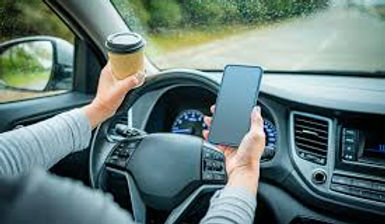


How many times have you looked down at your phone, only to realize the traffic in front of you has stopped? Every day, many people reach for their phones while driving, not realizing that a car can become a deadly weapon when attention is diverted. Distracted driving happens constantly, causing thousands of fatalities and hundreds of thousands in injuries annually in the United States. The consequences extend beyond just the driver, putting passengers, pedestrians, and other motorists at risk. By prioritizing awareness and enforcing tougher regulations, we can reduce texting and driving as a major cause of fatal accidents, and we can ensure that stricter measures are taken to create safety on the roads.
Texting while driving can be very dangerous because it takes eyes and mind off the road. When you are not watching the road, it is much easier to make mistakes and get into an accident. In recent years, distracted driving has caused over 90 percent of car crashes. Holzwarth says, “Most crashes are caused by people like you and me who think they can pay attention to the road and do something else at the same time.” (Holzwarth, 2018, Para. 3). This means that even regular people can make bad choices if they are not careful. Our attention is very limited, so it should stay on driving, not on our phones or anything else. Even just talking on the phone or chatting with friends while driving can triple your risk of having a crash compared to driving normally. Using a phone while driving actually causes more accidents than drunk driving. The National Highway Traffic Safety Administration says that “in 2023, 3,275 people were killed in crashes involving distracted drivers.”(Distracted Driving. NHTSA, Para. 1). This amount of people dying by distracted drivers is why, when we are on the road, it is important to always focus on driving, to keep both hands on the wheel, and to keep eyes ahead. Staying safe is more important than sending a text or making a phone call. And this issue hasn’t gone unnoticed. There are laws that attempt to address this problem.
For example, they started to introduce more laws like the “Hands free law” in Oklahoma. This is meant to prevent drivers from holding, touching, or using cellphones in any capacity during driving. And this isn’t a reaction isolated to Oklahoma, either. Many states are having to put laws in place to embed better road safety for others on the road. According to Distracted Driving Laws, "Distracted driving is not just an individual bad habit—it is a systemic public issue with legal, behavioral, and technological implications. Despite national efforts to curb distractions behind the wheel, more than 3,300 lives were lost in 2022 alone due to distracted driving.” (Christensen Law. 2025, Para. 45). The problem is that, even though these laws are in place, they are still not being strictly enforced, and most penalties are not very demanding. This means that distracted driving, something that could have easily taken someone’s life away, would regularly be met by a mere hundred dollar fine. In many cases, this would be even less. This issue, however, is not limited to phone usage. According to “Distracted Driving Laws,” distracted driving includes "any activity that diverts attention from driving, including talking or texting on your phone, eating and drinking, talking to people in your vehicle, and fiddling with the stereo, entertainment or navigation system." (Christensen Law. 2025, Para. 6).
Many drivers mistakenly believe they are above the law and justify using their phones while driving simply because they feel they can’t wait to check an important message. According to Distracted Driving, "One reason why people can experience the impulse to use their phones while driving is when they feel the need to connect with others. Phones allow for instant communication for people across the world. While that can help keep in contact with long-distance friends and family, it can also have an addictive quality." (Cellino Law, 2024, Para. 11). This is a dangerous habit that many need to break. Drivers often feel compelled to make phone calls, send texts, or even play music behind the wheel. Some people think that if they don’t check their phones for just a few minutes, they believe that they’ll miss out on crucial updates about celebrities, relatives, or even addictive apps. Because cellphones are addictive, we often seek a “good feeling” from our phones. According to Distracted Driving, “After a good interaction using the phone, the brain can experience a small chemical change called a dopamine boost, which is a positive, intense feeling of reward. It can have a similar effect on the brain as using a drug.”(Cellino Law, 2024, Para. 14). Unfortunately, after experiencing this good feeling, our brains don’t always recognize the serious risks. This is exactly the kind of thing that can lead to people using their phones behind the wheel and getting into car crashes.
In conclusion, texting and driving is known as a world-wide problem. Phones are getting to be such a big distraction that staying focussed on the road everyday at all times has become a suggestion rather than a practice. Even if some people disagree, the evidence clearly indicates that there is less of a hazard for everyone involved if safe driving practices are widely employed. If you think that an important message can't wait, you should pull over and finish your message there so that nobody else is put in any danger. We all know technology has had an increasing affect on our daily lives, and with this understanding there needs to be an accompanying realization that this must be accommodated for. It is important for not only ourselves but for others to take responsibility for our actions and what we do behind the wheel. For us to start having safer roads, we have to start reducing accidents caused by texting and driving, and that will require a combination of stronger laws, stricter enforcement, and education for everyone. Only by working together can we hope to make the roads safer for everyone.